
Table des matières
System design
SYSTEMS ENGINEERING FUNDAMENTAL
Department of defense, january 2001.
The Systems Engineering Process
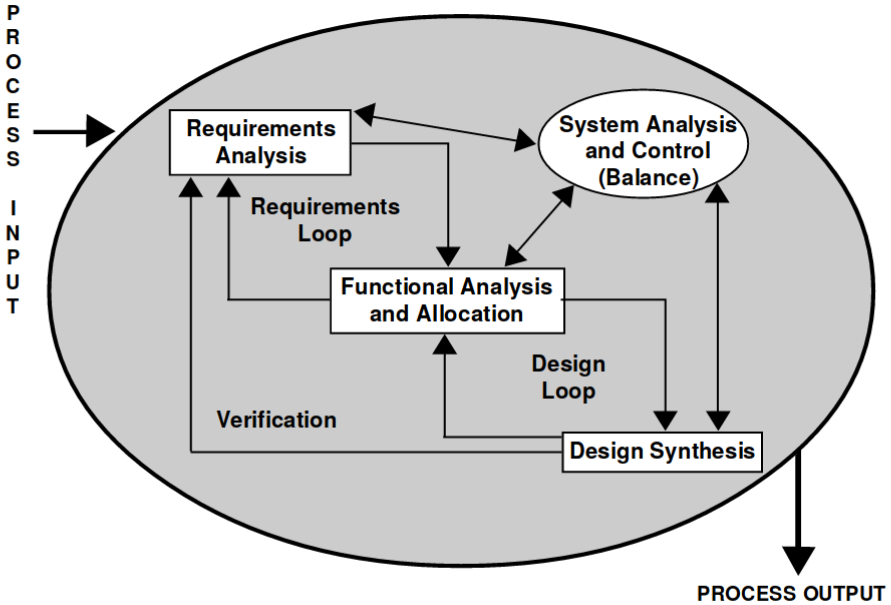
Systems engineering controls are used to track decisions and requirements, maintain technical baselines, manage interfaces, manage risks, track cost and schedule, track technical performance, verify requirements are met, and review/audit the progress.
The System architectures
Usable system architectures can be:
- functional
- physical
- system
These architectures are necessary components of the systems engineering process.
The Functional Architecture identifies and structures the allocated functional and performance requirements.
The Physical Architecture depicts the system product by showing how it is broken down into subsystems and components.
The System Architecture identifies all the products (including enabling products) that are necessary to support the system and, by implication, the processes necessary for development, production/construction, deployment, operations, support, disposal, training, and verification.
Responsabilities
Responsibilities of systems engineers include:
- Development of a total system design solution that balances cost, schedule, performance, and risk
- Development and tracking of technical information needed for decision making
- Verification that technical solutions satisfy customer requirement
- Development of a system that can be produced economically and supported throughout the life cycle,
- Development and monitoring of internal and external interface compatibility of the system and subsystems using an open systems approach,
- Establishment of baselines and configuration control
- Proper focus and structure for system and major sub-system level design IPT